Aug 29, 2026
Dog
Symptoms
What Is GDV in Dogs, and Why Does It Kill So Fast?
GDV, or bloat, can kill a dog within hours. Learn the warning signs, high-risk breeds, and why this is one emergency you can never wait out at home.

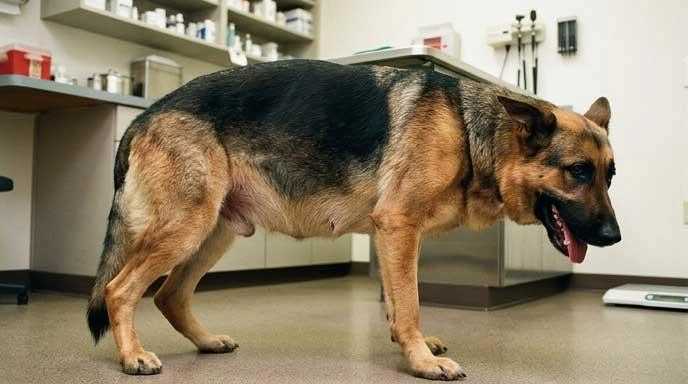
GDV (gastric dilatation-volvulus), commonly called bloat, is one of the fastest-moving true emergencies in veterinary medicine — a dog's stomach fills with gas and twists on itself, cutting off blood flow, and this can progress from first signs to a fatal outcome within hours. There is no home treatment, and it cannot resolve on its own. If you see the warning signs — especially in a large or deep-chested breed — the only correct response is to get to an emergency vet immediately, not to wait and watch.
What Actually Happens During GDV?
GDV happens in two parts. First, the stomach fills with gas, fluid, or food and distends (dilatation). Then, the distended stomach rotates on its own axis (volvulus), typically twisting clockwise. That twist seals off both the entrance and exit of the stomach, trapping the gas inside with nowhere to go, so pressure keeps building. The distended, twisted stomach then compresses major blood vessels in the abdomen, cutting off blood return to the heart and blood flow to the stomach wall itself. Left untreated, this leads to shock, heart arrhythmias, and death of the stomach tissue.
Bloat and GDV aren't quite the same thing. Simple bloat (dilatation without twisting) can sometimes resolve on its own and is occasionally managed medically. Once the twist happens, it's GDV — and GDV is a surgical emergency, essentially without exception.
What Are the Warning Signs?
A progressively swollen, distended abdomen — though this isn't always obvious, since the belly can be tucked up under the ribcage
Retching or unproductive vomiting — trying to vomit but bringing nothing up
Restlessness, pacing, or an inability to get comfortable
Excessive drooling
An arched back or other signs of abdominal pain
Weakness or collapse
Difficulty breathing
Pale gums
Unproductive retching is one of the most telling signs of all — a dog that keeps trying to vomit without anything coming up, combined with a swollen or painful belly, should be treated as GDV until proven otherwise.
Which Dogs Are Most at Risk?
GDV is most common in large, deep-chested breeds, including:
Great Danes
German Shepherds
Standard Poodles
Doberman Pinschers
Weimaraners
Saint Bernards
Gordon and Irish Setters
Male dogs are affected more often than females. Mixed-breed dogs with a deep chest, or a family history of GDV, carry a comparable risk to purebreds with the same body type — this isn't purely a purebred issue.
Other contributing factors include:
Eating a large meal in one sitting
Vigorous exercise soon after eating or drinking large amounts of water
Anxious or fearful temperament — calmer, more relaxed dogs appear to be at lower risk than "hyper" or fearful dogs in recent studies
A single, elevated food bowl (evidence here is mixed, but it's commonly discussed as a risk factor)
Illness that slows normal gut motility
Why Can't I Just Wait and See?
Because GDV can escalate from mild discomfort to a life-threatening crisis in a matter of hours, and there is no effective home treatment for it. Nothing you can do at home relieves the twist or the trapped gas — this requires emergency veterinary intervention, typically surgery, and delay directly costs your dog time that matters. If you're seeing the warning signs, especially in an at-risk breed, treat every minute as consequential.
How Is GDV Diagnosed and Treated?
X-rays are the gold standard for diagnosis, showing a classic "double bubble" appearance that confirms true volvulus (twisting) rather than simple bloat.
Bloodwork and an ECG assess shock severity, organ function, and check for dangerous heart arrhythmias, which are a common and serious complication.
Treatment starts immediately, often before diagnostics finish — aggressive IV fluids to combat shock, and decompression of the stomach (via a tube or needle) to relieve the dangerous gas buildup.
Surgery follows once the dog is stabilized, to untwist the stomach, remove any damaged tissue, and perform a gastropexy — surgically tacking the stomach to the abdominal wall to prevent it from twisting again.
Gastropexy dramatically reduces recurrence. Without it, bloat has been reported to recur in up to 75-90% of dogs. Because of this, some vets recommend a preventive gastropexy in high-risk breeds, often performed at the same time as a spay or neuter.
Can GDV Be Prevented?
There's no single known cause of GDV, so prevention isn't guaranteed, but several steps are commonly recommended for at-risk dogs:
Preventive gastropexy in high-risk breeds — the most effective known prevention method
Smaller, more frequent meals instead of one large daily meal
Avoiding vigorous exercise right before or after eating
Slowing down fast eaters with slow-feed bowls
Managing anxiety, since calmer temperaments appear linked to lower risk
Frequently Asked Questions
How fast can GDV kill a dog?
It can progress from first signs to a fatal outcome within hours, which is why it's treated as one of the most time-critical emergencies in veterinary medicine. There's no safe amount of time to wait once symptoms appear.
Is bloat the same thing as GDV?
Not exactly. Bloat (or gastric dilatation) is the stomach filling with gas, and it can sometimes occur and resolve without twisting. GDV specifically refers to the stomach twisting on top of that distension, which is what makes it a surgical emergency.
What's the earliest sign of GDV I should watch for?
Retching or trying to vomit without bringing anything up, especially combined with restlessness or a swollen or painful abdomen, is one of the most reliable early signs, particularly in large or deep-chested breeds.
Can GDV happen more than once in the same dog?
Yes — without a gastropexy, recurrence rates have been reported as high as 75-90%. This is why gastropexy is often recommended during the initial surgery, and sometimes performed preventively in high-risk breeds.
Is there anything I can do at home if I suspect GDV?
No. There is no effective home treatment for GDV, and it cannot resolve without medical intervention. The only appropriate response is to get to an emergency veterinarian immediately.
Have a High-Risk Breed? Know the Signs Before You Need Them
GDV moves too fast to research in the moment — the dogs with the best outcomes are the ones whose owners recognized the signs immediately. PetFirst Assist uses your dog's actual profile — including breed — to help you understand symptoms and recognize when something needs emergency care right now.
PetFirst Assist is an informational tool and does not replace professional veterinary diagnosis or treatment. If you suspect GDV, contact an emergency veterinarian immediately — do not wait to see if symptoms improve.
More Blogs