Aug 29, 2026
Turtle
Symptoms
What Is Shell Rot in Turtles?
Shell rot (ulcerative shell disease) starts small but can spread and turn fatal. Learn the early signs, causes, home care limits, and vet warning signs.

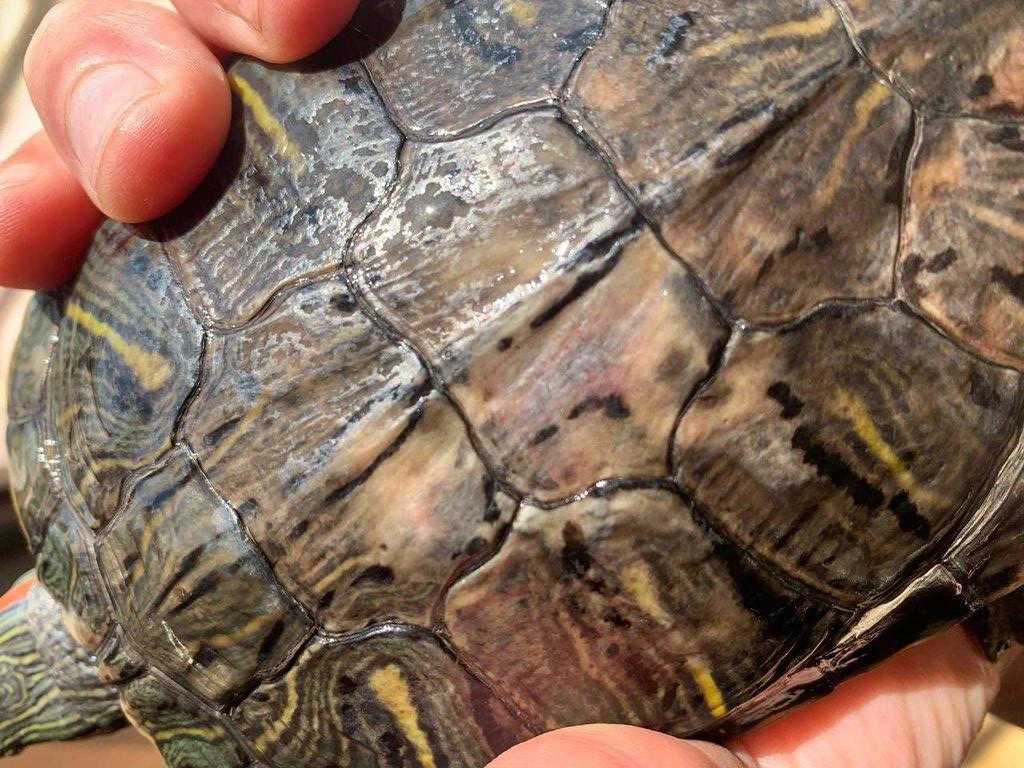
Shell rot, also called ulcerative shell disease, is a bacterial or fungal infection of the shell that usually starts small — a soft spot, discoloration, or a foul smell — but can spread deep into the shell and become life-threatening if left untreated. It's most often triggered by poor husbandry or an untreated minor injury that lets pathogens into the living tissue beneath the shell's hard outer layer. Mild cases can sometimes be managed at home, but anything soft, smelly, spreading, bleeding, or painful needs a reptile veterinarian.
What Is Actually Happening Under the Shell?
A turtle's shell isn't just hard armor — underneath the keratinized outer layer sits a base of bone, blood vessels, and nerves. When the surface is compromised, even by a small injury, bacteria, fungi, or (in aquatic species) algae can get in and start breaking down the living tissue beneath. Left untreated, this can deepen into painful abscesses that fester for months or years, and in severe cases progress to septicemic cutaneous ulcerative disease (SCUD) — a bloodstream infection that can become fatal if it reaches the turtle's internal organs.
What Does Shell Rot Look Like?
Signs vary depending on how advanced the infection is, and pet turtles often show more subtle symptoms than turtles in the wild:
White, gray, yellow, red, brown, or black patches on the shell
A soft spot on what should be a hard shell (outside of normal shedding)
Pitting or small holes forming just under the shell surface
Loose, lifting, or flaking scutes (shell segments)
A slimy layer or discharge, sometimes reddish or bloody, under the shell plates
A foul, unmistakable odor
A shell that damages more easily than normal
Normal shedding looks very different from shell rot. Healthy shedding comes off as thin, clear, paper-like layers with a hard, healthy shell underneath — not soft, pitted, or foul-smelling tissue.
What Causes Shell Rot?
Shell trauma. Injuries from fighting between turtles, sharp enclosure edges, or attempts to escape create an entry point for infection.
Poor water quality. A major contributor in aquatic species, since bacteria thrive in dirty or poorly maintained water.
Prolonged exposure to wet substrate. For turtles that spend time on land, standing on substrate that's too damp or unclean for too long can soften and infect the shell.
Metabolic bone disease or nutritional deficiencies, including calcium deficiency, which weakens the shell overall and makes it more vulnerable.
Lack of natural sunlight or proper UVB exposure.
Algae buildup on the shell in aquatic species, which can itself become a source of infection.
When Does This Need a Vet, Not Just Home Care?
See a reptile veterinarian if the affected area is:
Soft, when it should be hard
Foul-smelling
Red, bleeding, or exposing tissue or bone
Deep or clearly spreading beyond the original spot
Painful to the touch
Paired with illness signs — not eating, lethargy, swollen eyes, bubbles from the nose, wheezing, uneven floating, weakness, or weight loss
A mark on the shell that grows, deepens, or changes color should always be treated as suspicious, even if it doesn't look dramatic yet.
What Can I Do for a Mild Case at Home?
Very early, mild shell rot — a small discolored spot with no softness, odor, or illness signs — is sometimes manageable with husbandry corrections, though anything beyond mild still needs a vet:
Improve water quality immediately. Clean, well-filtered water is one of the biggest levers you have, especially for aquatic species.
Ensure proper basking access. Adequate heat, UVB lighting, and time out of water help a turtle's immune system and shell health.
Keep terrestrial substrate clean and appropriately dry. Standing water or dirty, damp substrate is a common contributor.
Gently clean the shell to remove algae or debris, using a soft brush — this also gives you a regular chance to inspect for early changes.
Review the diet for calcium and nutritional adequacy.
Monitor closely and don't wait long to escalate. If the spot isn't visibly improving within a few days, or looks the same or worse, it's time for a vet rather than continuing home efforts.
What Does Veterinary Treatment Involve?
A vet will typically clean and debride the affected area, run diagnostics to identify whether bacteria, fungus, or a mix is responsible, prescribe targeted antibiotics or antifungals, and often recommend "dry-docking" — limiting time in water so the shell can heal without staying constantly wet. Because husbandry conditions are usually part of the underlying cause, treatment also involves reviewing and correcting the turtle's setup, not just treating the shell itself. Shell healing is a slow process, often taking weeks to months, so a long recovery timeline should be expected even with proper treatment.
Frequently Asked Questions
Can shell rot heal on its own?
Very mild, early cases caught quickly alongside husbandry corrections sometimes improve without a vet, but shell rot can also worsen quickly and become painful or life-threatening. Anything soft, smelly, spreading, or paired with illness signs should always be seen by a reptile vet rather than treated at home alone.
Is shell rot contagious to other turtles?
Shell rot itself is driven mostly by husbandry conditions and injury rather than being highly contagious between turtles the way a virus might be, but poor water quality or a shared unclean enclosure can create conditions where multiple turtles develop it around the same time.
How long does it take for shell rot to heal?
Recovery is typically a long process, often taking weeks to months, even with proper veterinary treatment. Shells are slow to heal by nature, so patience and consistent husbandry corrections matter throughout.
What's the difference between normal shedding and shell rot?
Normal shedding comes off in thin, clear, paper-like layers with a hard, healthy shell underneath. Shell rot looks and feels different — soft spots, pitting, foul odor, or discolored patches that don't match a clean shedding pattern.
Can shell rot become life-threatening?
Yes. If untreated, it can progress to septicemic cutaneous ulcerative disease (SCUD), where bacteria enter the bloodstream and spread through the body, which can be fatal if it affects vital organs.
Not Sure If It's Shell Rot? Get Guidance for Your Specific Turtle
Shell changes can range from a normal part of shedding to a serious infection, and it's not always obvious which one you're looking at. PetFirst Assist lets you describe exactly what you're seeing — shell texture, color, smell, other symptoms — and get guidance based on those details, plus a clear signal on when it's time to see a reptile vet.
PetFirst Assist is an informational tool and does not replace professional veterinary diagnosis or treatment. Shell rot should be evaluated by a reptile veterinarian, especially if the area is soft, red, spreading, or paired with signs of illness.
More Blogs