Aug 15, 2026
Fish
Symptoms
Why Is My Fish Swimming Sideways?
A fish swimming sideways is usually a swim bladder problem. Learn the common causes, what you can try at home, and when it's time for vet care.

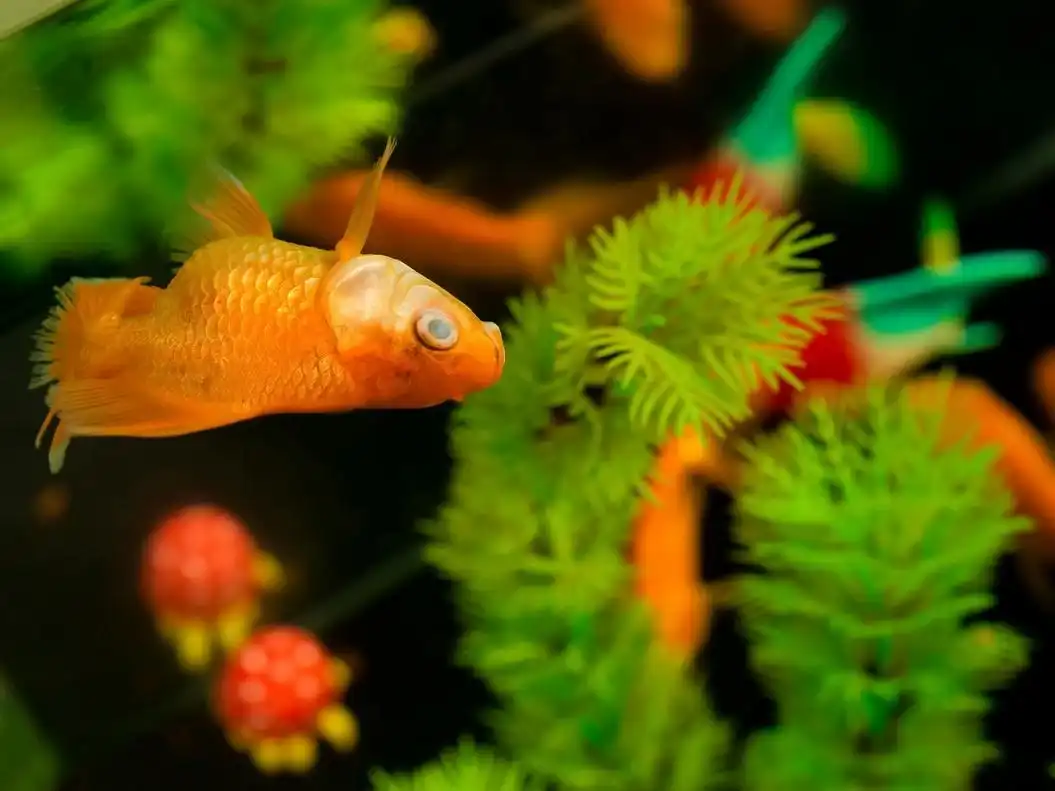
A fish swimming sideways is most often a sign of swim bladder disorder — a buoyancy problem, not a single disease, usually caused by overfeeding, poor water quality, constipation, or infection. It's common, especially in goldfish and bettas, and it's often treatable at home when caught early. Some causes need a vet who specializes in aquatic animals, so it's worth knowing which symptoms point where.
What Is Swim Bladder Disorder?
The swim bladder is a gas-filled organ inside your fish that controls buoyancy, letting it hold a position in the water without constantly swimming to stay there. When something disrupts that organ, the fish loses precise control over depth and orientation.
Swim bladder disorder isn't one specific illness — it's a symptom with several possible triggers. That's why two fish swimming sideways can need two completely different fixes.
What Causes a Fish to Swim Sideways?
Overfeeding or constipation. A distended gut can press on the swim bladder and throw off buoyancy — one of the most common causes in goldfish.
Poor water quality. Unstable ammonia, nitrite, or nitrate levels stress a fish's whole system, including the organs that regulate buoyancy. This is the most overlooked cause.
Swallowing air. Gulping air at the surface while eating, especially with floating flake food, can affect the digestive tract and the swim bladder.
Bacterial or parasitic infection. Infections can inflame or damage the swim bladder directly.
Physical injury or trauma. A fall, collision, or rough handling can damage the organ.
Genetics. Fancy goldfish and some selectively bred varieties are more prone to swim bladder problems due to their body shape.
Temperature swings. Rapid changes in tank temperature can trigger stress-related buoyancy issues.
What Does Swim Bladder Disorder Look Like?
Along with swimming sideways, watch for:
Floating nose-down, tail-up
Sinking to the bottom and struggling to rise
Floating helplessly at the surface
A visibly swollen or bloated belly
Reduced appetite or lethargy
Difficulty maintaining balance overall
What Can I Try at Home?
If your fish is otherwise alert and eating, these steps often help with mild, diet-related cases:
Test your water first. Check ammonia, nitrite, nitrate, and pH — poor water quality is the most common root cause and the easiest to rule out.
Stop feeding for 24–48 hours. This gives the digestive tract a chance to clear if constipation is the cause.
Offer a skinned, cooked pea. After the fasting period, a small piece of pea (shell removed) is a classic remedy for goldfish constipation.
Keep the temperature stable. Avoid sudden swings; stable, species-appropriate temperature reduces stress on the fish's system.
Switch to sinking food if your fish gulps air eating floating flakes or pellets.
Swim bladder disorder is not contagious — if one fish in the tank is affected, your other fish won't "catch it," though they can be at similar risk if the underlying cause is tank-wide (like water quality).
When Should I See a Vet?
See an aquatic veterinarian if:
Home care doesn't improve things within a few days
Your fish stops eating entirely
The belly looks swollen, bloated, or asymmetric
Symptoms are severe — flipping completely upside down, or unable to swim at all
You suspect infection rather than diet or water quality
Aquatic vets typically use imaging, like X-rays, to check whether the cause is structural, infectious, or something else — which isn't something you can determine from home observation alone.
Frequently Asked Questions
Why is my fish swimming sideways?
Most often it's swim bladder disorder, caused by overfeeding, poor water quality, constipation, infection, or physical injury. The exact cause determines whether it clears up with a few days of home care or needs veterinary treatment.
Is a fish swimming sideways an emergency?
Not usually, if your fish is still eating and alert. It becomes urgent if your fish stops eating, the belly looks swollen, or the fish is fully upside down or unable to swim at all.
Will feeding my fish peas fix swim bladder disorder?
A skinned, cooked pea can help when constipation is the cause, since it's easy to digest and can relieve pressure on the swim bladder. It won't help if the cause is water quality, infection, or injury.
Is swim bladder disorder contagious to my other fish?
No. It's a symptom, not a disease, so it doesn't spread fish-to-fish. Other fish can still be at risk if the underlying cause — like poor water quality — affects the whole tank.
Can swim bladder disorder go away on its own?
Mild, diet-related cases often resolve within a few days with fasting and stable water conditions. Cases caused by infection or injury typically need veterinary treatment to fully resolve.
Not Sure What's Going On? Get Guidance for Your Specific Fish
Every case looks a little different, and figuring out whether this is a wait-and-watch situation or a vet visit can be hard from a generic search. PetFirst Assist lets you describe exactly what your fish is doing — swimming sideways, floating, sinking, not eating — and get guidance based on those specific details, plus a clear signal on when it's time for professional care.
PetFirst Assist is an informational tool and does not replace professional veterinary diagnosis or treatment. For serious or life-threatening symptoms, contact a veterinarian experienced in aquatic animals immediately.
More Blogs