Aug 17, 2026
Cat
Symptoms
Why Is My Cat Vomiting?
Cat vomiting can be a harmless hairball or a sign of something serious. Learn the common causes, what the vomit tells you, and when to call the vet.

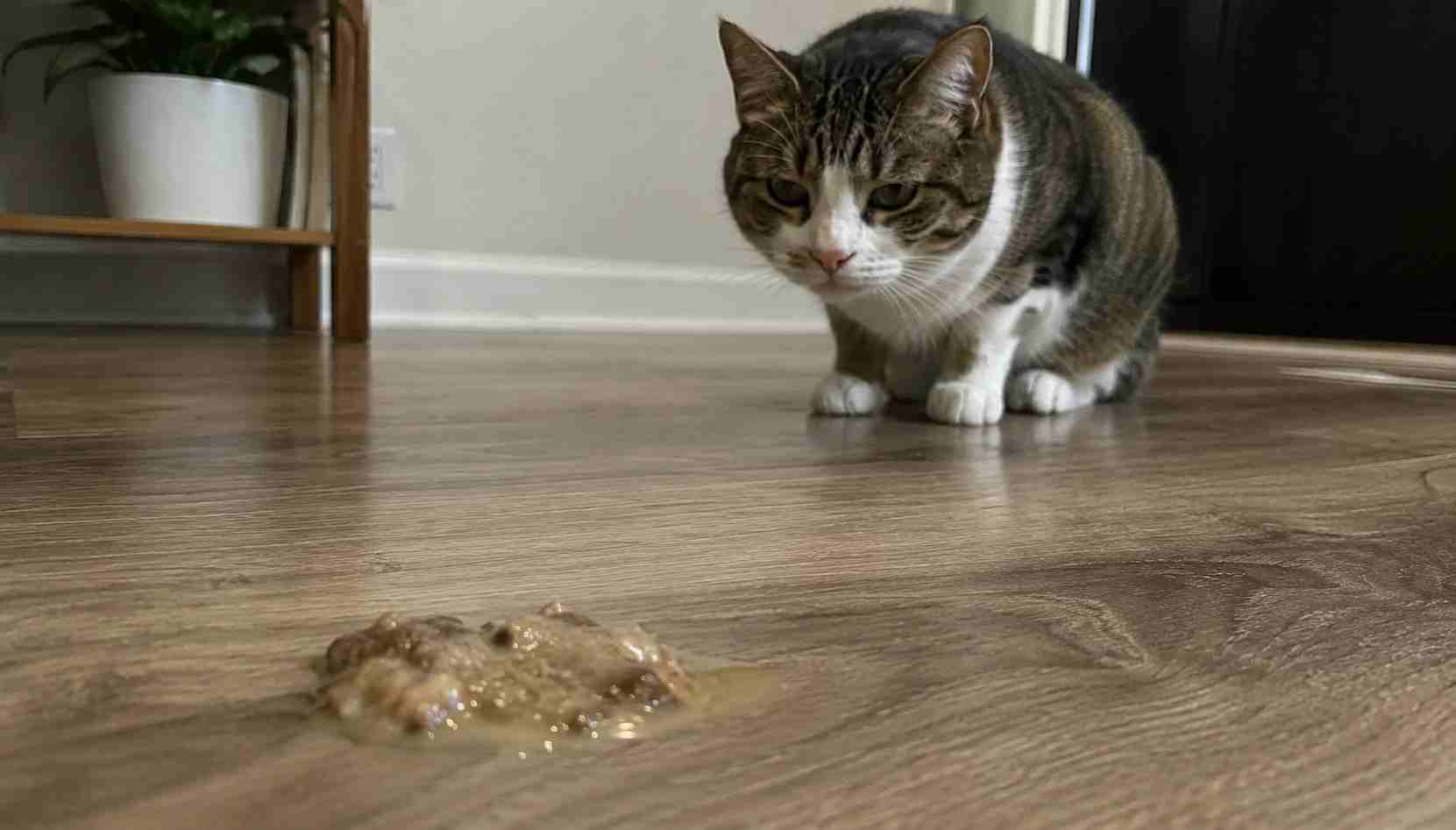
An occasional hairball or a single episode of vomiting in an otherwise normal cat usually isn't an emergency. Vomiting that happens multiple times in a day, contains blood, or comes with low energy, hiding, or a refusal to eat is different — those combinations can point to a blockage, toxin exposure, or a serious underlying illness, and need veterinary care right away.
What Causes Cats to Vomit?
Hairballs. Common in cats that groom often, especially long-haired breeds. Occasional and otherwise-normal-acting is usually not concerning.
Dietary indiscretion. Eating too fast, spoiled food, or getting into something they shouldn't.
Food allergies or intolerance. Reactions to specific ingredients can cause recurring vomiting after meals.
Foreign object ingestion. String, ribbon, rubber bands, and small toys are common culprits, especially in younger cats, and can cause a dangerous blockage.
Toxin exposure. Toxic plants like lilies, cleaning products, human medications, and foods like onions, garlic, or chocolate.
Parasites or infection. Viral, bacterial, or parasitic causes often come with diarrhea or lethargy too.
Chronic illness. Kidney disease, hyperthyroidism, diabetes, and pancreatitis can all present with vomiting, often alongside increased thirst, weight loss, or appetite changes.
What Does the Vomit Look Like? Why It Matters
Appearance | What it may indicate |
|---|---|
Cylindrical, fur-filled (hairball) | Usually not concerning if infrequent |
Clear or white, foamy | Often regurgitation or an empty stomach |
Yellow or green (bile) | Empty stomach, or possible liver/bile duct involvement if repeated |
Undigested food | Eating too fast, intolerance, or possible obstruction |
Bright red blood | Active bleeding — seek care immediately |
Dark, coffee-ground-like | Digested blood — seek care immediately |
Worms visible | Intestinal parasites — deworming needed |
Vomit appearance doesn't give a definitive answer on its own, but it gives your vet a place to start.
When Is Cat Vomiting an Emergency?
Seek veterinary care immediately if your cat:
Vomits multiple times within a few hours, or repeatedly over 24 hours
Has blood in the vomit — bright red or coffee-ground-like
Is weak, hiding, or has low energy
Refuses food or water for more than 12 hours
Is also having diarrhea (dehydration risk rises quickly)
Shows pain — crying when touched, hunched posture
Has difficulty breathing, pale gums, or a racing heart rate
Vomits a worm
Has a known illness like diabetes, kidney disease, or hyperthyroidism — vomiting can signal the condition is progressing and needs prompt evaluation
May have swallowed string, ribbon, or another foreign object — this is always treated as an emergency, even with only mild symptoms at first
Cats that keep eating and drinking normally, use the litter box as usual, and have normal energy are less likely to be facing an emergency — but continued vomiting past 24 hours still warrants a vet call even without other symptoms.
What Can I Do at Home for Mild Vomiting?
If your cat has vomited once, is acting normal otherwise, and shows no other symptoms:
Watch and wait briefly. A single, isolated episode with normal behavior afterward often doesn't need immediate action.
Offer a small bland meal once a few hours have passed without further vomiting.
Check for hairball patterns. Frequent hairball vomiting, especially in long-haired cats, is worth mentioning at a regular vet visit — it can sometimes point to an underlying digestive issue rather than just grooming habits.
Track frequency and appearance. This detail helps your vet narrow down the cause faster if it continues.
Call your vet if vomiting continues past 24 hours, even without other symptoms.
Frequently Asked Questions
When should I take my cat to the vet for vomiting?
Go in right away for repeated vomiting within a few hours, blood in the vomit, weakness, refusal to eat or drink for over 12 hours, or vomiting alongside diarrhea. A single mild episode in a cat acting normally usually isn't an emergency, but vomiting lasting more than 24 hours should still be checked.
Are hairballs something to worry about?
An occasional hairball in a cat that's otherwise acting normal usually isn't a concern. Frequent hairball vomiting can sometimes point to an underlying digestive issue and is worth mentioning to your vet.
What does it mean if my cat's vomit has blood in it?
Blood in vomit — bright red or resembling coffee grounds — is always considered an emergency and needs immediate veterinary attention.
Is vomiting more serious in cats with existing health conditions?
Yes. Cats with diabetes, kidney disease, or hyperthyroidism can decline quickly if vomiting starts, since it may signal the condition is progressing. These cats should be seen promptly rather than waiting it out.
Can stress cause a cat to vomit?
Yes, though it's less common than dietary or hairball-related causes. Changes in routine, new pets, or anxiety can contribute, and gradual adjustments or calming strategies can help.
Not Sure If This Is Serious? Get Guidance for Your Specific Cat
Vomiting can mean anything from a hairball to a swallowed object, and the right response depends on details a generic search can't weigh for you. PetFirst Assist lets you describe exactly what's happening — how often, what it looks like, what else you're seeing — and get guidance based on those specifics, plus a clear signal on when it's time to call the vet.
PetFirst Assist is an informational tool and does not replace professional veterinary diagnosis or treatment. For serious or life-threatening symptoms, contact a veterinarian or emergency veterinary hospital immediately.
More Blogs